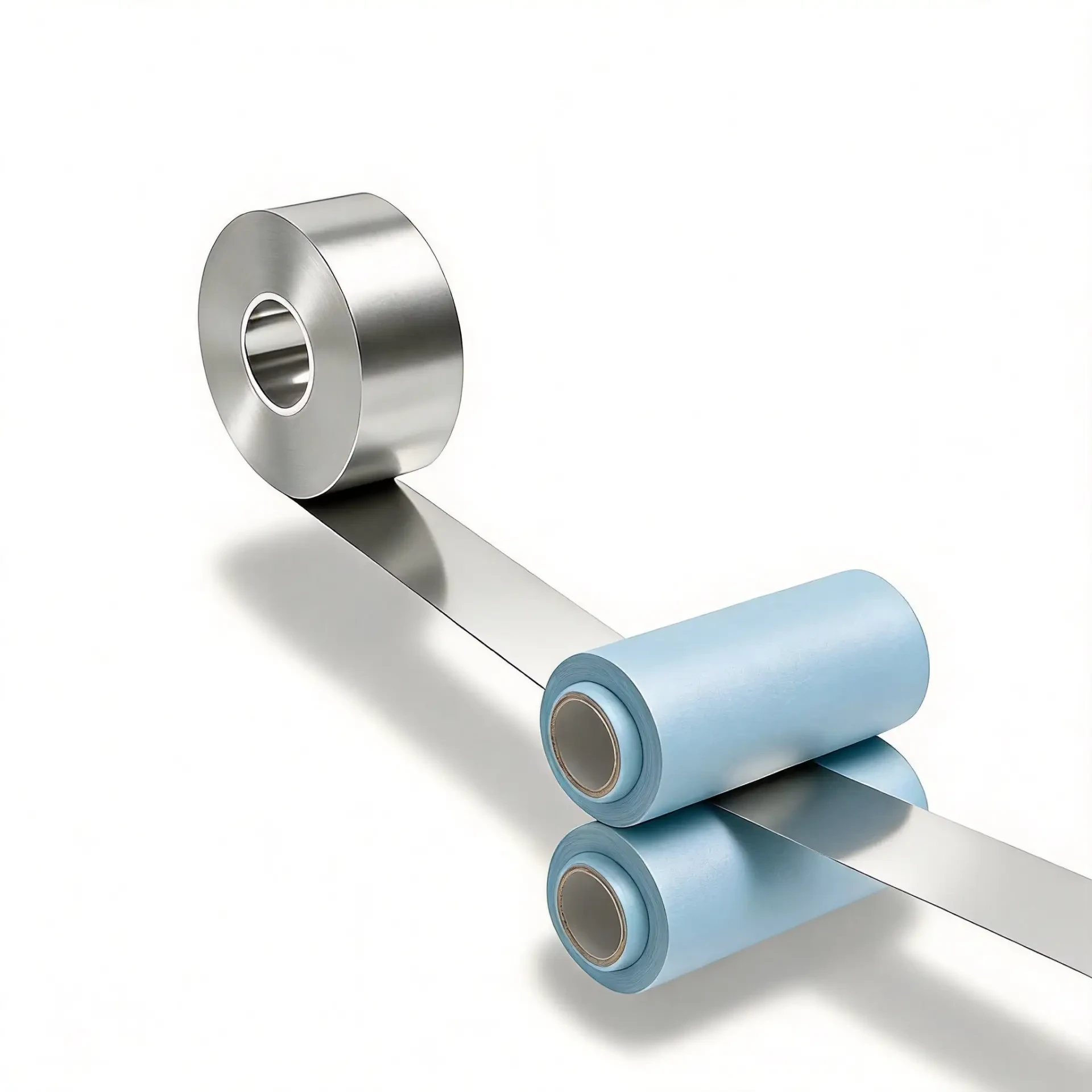
Clad materials
Titanium Alloy Clad
Titanium clad layer: corrosion-resistant to seawater and chloride ions, lightweight, and composite-compatible with steel or copper.
- Material System
- Composite materials
- Available Forms
- Strip / Foil
- Thickness Range
- 0.015 – 1.50 mm

Material Overview
Composite strips with an industrial pure titanium or titanium alloy cladding layer offer corrosion and chlorine resistance, while the base metal provides strength and cost efficiency. Ideal for seawater heat exchangers, electrolytic electrodes, and corrosion-resistant chemical processing structures.
Alias / Benchmark:Titanium Alloy Composite Strip
Available Forms
Tapes · Foils
Thickness / Diameter
0.015 – 1.50 mm
Width
3 – 100 mm
Supply Status
Soft / Cold-worked / Aged, as agreed in the order
Mechanical and Physical Properties
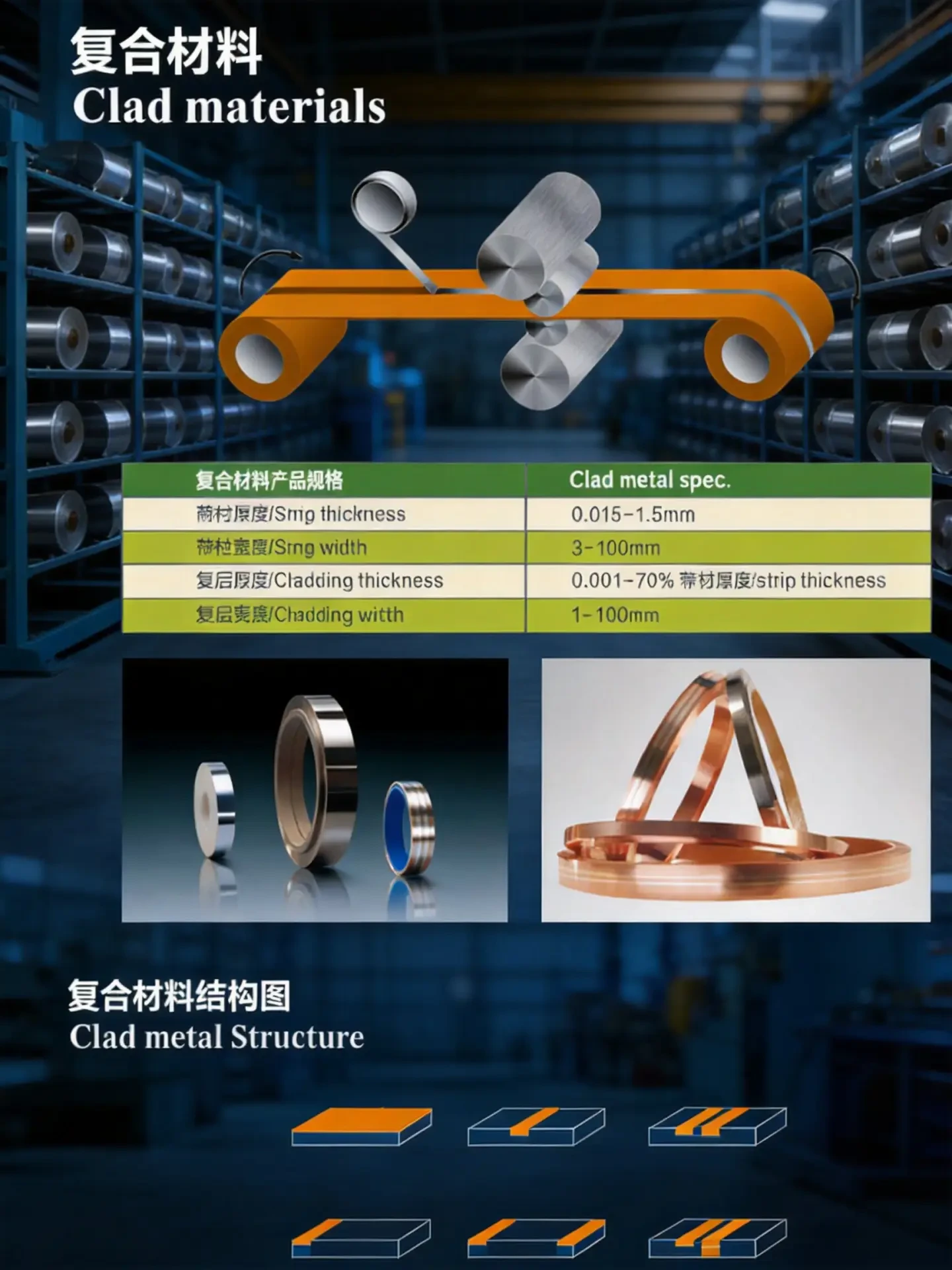
| Project | Reference Range |
|---|---|
| Strip Thickness | 0.015 – 1.50 mm |
| Strip Width | 3 – 100 mm |
| Laminate thickness | 0.001% – 70% of strip thickness |
| Multilayer Width | 1 – 100 mm |
| Grain Size / Surface Defects | Updating data |
Values in the table are typical references and may vary by specification, condition, and batch. Final warranty data is governed by the order confirmation document.
Product Specifications & Structure
Applicable Standards
Typical Applications
- Seawater heat exchanger
- electrolytic electrode
- Corrosion-resistant chemical structures
Same category brand
- Copper-Steel CladCombines copper layer conductivity with steel layer strength; clad thickness is customizable by ratio.
- Ni-Cu CladCombines corrosion resistance of nickel with conductivity of copper, featuring strong interfacial bonding and localized composite capability by strip position.
- Copper / Copper-Alloy CladConductive and structural layers are clearly separated, with adjustable layer ratios and localized composite bonding by strip position.